
3 Jul, 2026
Compare the 3 best forex CRMs for exposure monitoring and risk visibility in 2026, and see which platform gives brokers the clearest real-time view of risk.

Brokerage growth starts becoming difficult long before revenue slows down. The operational cracks show up first.
The sales team is using WhatsApp and spreadsheets to manage hundreds of open leads. KYC is still a manual process, taking days to clear. IB commissions are being reconciled manually at the end of every month, and disputes keep surfacing. The retention team notices churn weeks after trading activity drops. Management asks for a deposit attribution report and gets different answers from different departments.
At that point, the CRM is no longer just a tool. It has become an operational bottleneck.
That is usually the stage where brokerages begin evaluating AltimaCRM seriously. The platform was built specifically around the operational complexity of regulated, high-volume forex brokerages, where sales, onboarding, compliance, retention, and IB management all need to operate with shared visibility across the business.
The issue is rarely a lack of features. Most forex CRMs already offer long feature lists. The real problem is that forex brokerages operate very differently from traditional sales businesses, and disconnected systems become difficult to manage once volume increases.
A forex brokerage is simultaneously managing lead acquisition, onboarding, retention, compliance exposure, payment operations, and IB relationships under continuous regulatory oversight. Each function affects the others. When those workflows operate across separate tools and reporting systems, operational visibility starts breaking down quickly.
Leads begin falling between systems. Compliance becomes reactive instead of embedded into the workflow. Management loses visibility because no centralized operational picture exists across the brokerage.
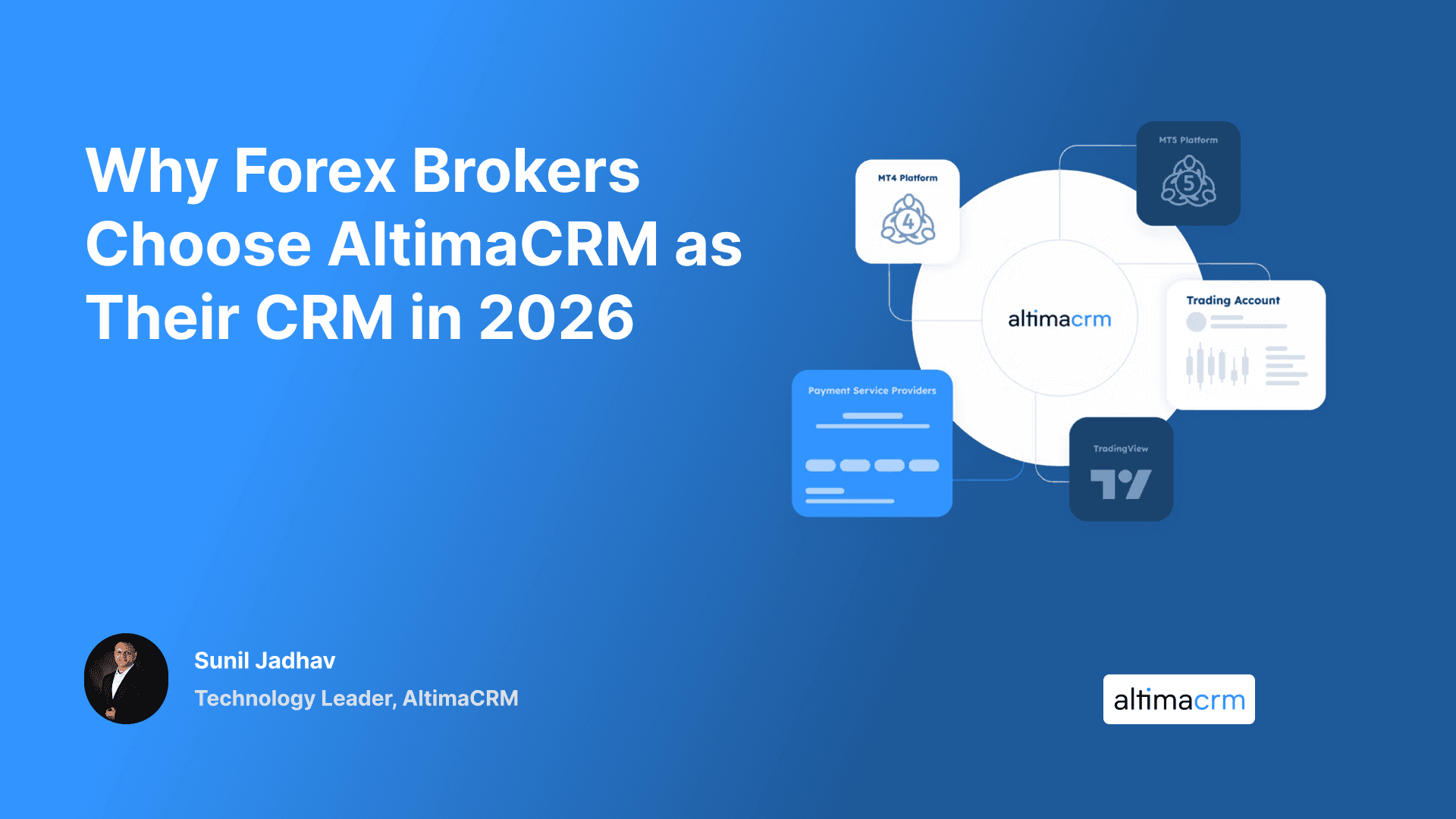
AltimaCRM is built to centralize those workflows inside one operational infrastructure layer. Sales, onboarding, compliance, retention, IB management, and payment tracking operate from the same live environment with shared reporting and continuous audit visibility.
That structural shift is what brokerages are actually evaluating in 2026. CRM selection is no longer about feature comparison alone. It is about operational control at scale.
Alise N. says the integration between MT5, VoIP, and their KYC provider “helped replace 5 separate operational systems” with one centralized dashboard while cutting onboarding time in half.
Brokerages rarely evaluate a new CRM from a standing start. Most are already operating on existing systems. The decision to switch usually happens when operational friction starts affecting conversion, onboarding, compliance visibility, and retention at the same time.
Lead volume is increasing, but visibility across the funnel is limited. Sales teams cannot clearly see which channels are converting, where funded accounts are dropping off, or which workflows are slowing response time. Without a centralized lead-to-deposit view, performance management becomes reactive.
A trader registers, submits documents, waits days for verification, and funds an account elsewhere. At scale, onboarding speed becomes part of conversion infrastructure, not just a compliance workflow.
Commission reconciliation starts consuming significant operational bandwidth. Reporting disputes become frequent, payout visibility drops, and IB relationships become harder to manage consistently as the network expands.
Audit requests require pulling records across multiple systems, communication logs, and onboarding workflows. As regulatory pressure increases, a fragmented compliance infrastructure becomes increasingly difficult to sustain operationally.
By the time declining activity appears in reporting, the client has often already disengaged. Without behavioral visibility and early engagement signals, retention teams are forced to react after revenue risk has already developed.
These are typically the inflection points that push brokerages to evaluate AltimaCRM more seriously. They also reflect the exact workflows the platform was designed to centralize.
AltimaCRM gives sales teams a centralized pipeline view from first contact through funded account status. Lead source data, communication history, agent activity, deposit behavior, follow-up workflows, and retention visibility all operate inside the same environment.
Calls through AltimaVoIP are logged directly against the client record, so sales managers no longer need to piece together activity across separate systems. Visibility improves across the entire funnel, making it easier to identify where conversion slows, where funded accounts are being lost, and which acquisition channels are actually performing.
Brokerages using AltimaCRM typically see conversion rate improvements in the range of 20% to 30% once that visibility becomes centralized.
Daniel R. says AltimaCRM “completely transformed” their sales pipeline and points to automated lead routing and real-time trader activity visibility as major contributors behind a “27% jump in conversion rates within the first 30 days.”
Slow KYC remains one of the most expensive operational delays in retail forex. AltimaCRM uses AI-powered, multi-provider KYC verification to reduce onboarding friction and shorten verification timelines significantly.
Compliance teams move from manual document handling to structured onboarding workflows, while traders move through verification faster. Brokerages transitioning from manual review processes can reduce onboarding time by up to 60% while maintaining audit-ready compliance records.
Alex M. describes AltimaCRM as “built for serious compliance” and highlights instant OCR, sanctions checks, and centralized audit trails as key reasons their team was able to move through audits significantly faster.
AltimaCRM's Partner Portal centralizes multi-tier IB management, commission tracking, referral attribution, and payout visibility within a single reporting layer.
IBs can monitor performance and commissions independently without relying on the operations team for updates. Manual reconciliation work drops significantly, disputes become easier to resolve, and payout visibility improves across growing IB networks.
For brokerages with large regional affiliate structures, this is often one of the fastest operational improvements after implementation.
AltimaCRM gives retention teams visibility into behavioral signals before churn becomes permanent. Deposit frequency changes, declining trading activity, engagement drops, and risk indicators can all trigger automated re-engagement workflows.
Instead of reacting after accounts go inactive, brokerages gain earlier visibility into revenue risk and can intervene while the client is still active.
Every operational action inside AltimaCRM is logged within an immutable audit trail. Compliance teams can access onboarding history, communication records, verification workflows, and client activity from one centralized reporting environment instead of pulling records manually across multiple systems.
KYC workflows are configurable by jurisdiction, and the platform supports GDPR-ready and PCI DSS-compliant operations for regulated brokerages operating across multiple markets.
AltimaCRM fits brokerages where lead volume, compliance requirements, onboarding pressure, and IB complexity are all increasing at the same time. That typically describes regulated growth-stage brokerages operating beyond the point where disconnected systems can scale cleanly.
The impact is usually felt fastest across sales, retention, and compliance workflows. Once pipeline visibility, behavioral tracking, communication history, and reporting operate inside the same infrastructure layer, teams spend less time coordinating manually and more time acting on live operational data.
It also fits two distinct brokerage stages well. Brokerages moving off an existing CRM get migration and implementation structured around operational continuity, so existing workflows are not disrupted during the transition. Brokerages launching newer operations get infrastructure designed to handle operational complexity from the beginning without relying heavily on internal technical teams.
The common thread is operational maturity. AltimaCRM is built for brokerages that need scalable infrastructure, centralized visibility, and tighter operational control as the business grows.
Many CRM platforms in the forex space were adapted into brokerage environments over time. The operational gaps usually appear later, once lead volume increases, compliance pressure grows, and multiple teams start depending on the same infrastructure simultaneously.
AltimaCRM has been shaped through nearly two decades of real brokerage operations across different growth stages, regulatory environments, and workflow structures. The platform reflects how brokerages actually function day to day, rather than forcing brokerage workflows into a generic CRM model.
That operational depth shows up in the details. AltimaVoIP is built directly into the platform, so communication history stays attached to the same client record automatically. IB management supports multi-tier structures and automated payouts as core infrastructure, not an external add-on. Compliance workflows can be configured by jurisdiction for brokerages operating across multiple regulatory environments.
For leadership teams evaluating forex CRMs, the question is rarely about which platform has the longest feature list. It is whether the platform can support brokerage growth without operational visibility breaking down as the business scales.
Brokerage growth eventually becomes an operational challenge. The systems that work at one stage of growth start creating friction at the next, especially once lead volume, compliance pressure, onboarding complexity, and IB activity begin scaling simultaneously.
Early on, disconnected workflows are manageable. Sales operates from one system, compliance from another, and retention depends on manual follow-ups. As the brokerage grows, visibility starts fragmenting across departments, and operational coordination becomes harder to sustain.
AltimaCRM was built for that stage of growth. The platform centralizes sales, onboarding, compliance, retention, finance, and IB management into one operational infrastructure layer so teams work from shared visibility instead of disconnected reporting systems.
For brokerages evaluating CRM infrastructure in 2026, the decision is no longer just about features. It is about operational control, scalability, and whether the platform can support growth without operational visibility breaking down over time.
If you want to see how AltimaCRM maps to your specific brokerage setup, book a demo with the AltimaCRM team.
See AltimaCRM in action.